


Optionality has crippled modern shopping. Consumer choice, once hailed as a cornerstone of freedom and progress, has passed the point of diminishing returns.
When the first supermarkets appeared in the 1930s, they offered on average 9,000 products under one roof, which was many times more than traditional general stores had offered prior. Today, the typical supermarket stocks closer to 40,000 products, while online marketplaces add millions more at a click. As a result, the average shopper has gone from making 15 purchase decisions a day to hundreds.
For the vast majority of what we buy—staples like toothpaste, paper towels, or eggs—features aren't just uninteresting, they’re unhelpful. In grocery aisles alone, shoppers spend an average of four minutes deliberating per item, with more than a third reporting “aisle anxiety.” 74% of consumers have even reported walking away from a purchase because the options felt overwhelming.
The result of our increased optionality isn’t empowerment. It’s paralysis.
I feel this myself. When I shop for groceries, I care deeply about a handful of brands: Good Culture cottage cheese (with the fruit on the bottom), David protein bars, Smartfood White Cheddar Popcorn, and Coke Zero. If those aren’t available, I notice. Most other items in my cart are placed there at random, often hastily selected to minimize my time in a store.

We’ve reached the end of limitless choice as progress. Increasingly, it’s not optionality but convenience that feels like a luxury.
The next leap isn’t another recommendation algorithm—it’s delegation. For centuries, outsourcing preference was a privilege of the powerful: kings had stewards; executives and the wealthy relied on chiefs of staff and assistants to strip friction from daily life. Soon, billions of people will have that same privilege. AI agents will decide, buy, and negotiate on our behalf. That’s the promise of the agentic internet.
But it also raises three sharp questions. How will retailers compete for attention once agents do the choosing? How much of ourselves are we willing to automate away? And what happens if we all share the same assistant?
From Clicks to Conversations and Recommendations to Personalizations
eCommerce AI is still stuck in yesterday’s playbook. Amazon nudges us with browsing patterns. Airlines juggle fares dozens of times a day. Netflix fine-tunes its suggestions. Helpful, yes—but incremental. These are tweaks, not transformation.
Why? Because traditional e-commerce treats every shopper the same: search, scroll, sift, add to cart, buy—or abandon.
The real change will come when agents flip this model. When consumers stop being recommended to and start being represented.
Agentic commerce won’t drown us in more options. It will deliver the right ones. Agents will compare, filter, and negotiate in the background, surfacing only a curated set of optimal choices. They won’t whisper in our ear. They’ll act in our stead.
The potential is staggering. Imagine an agent that:
Builds your grocery list around your diet or religious needs.
Designs a vacation around your dream destinations and activity level.
Recommends appliances based on your actual energy use.
Crafts a week of meals tuned to your health goals.
The consumer journey collapses into a single logic: Do I care, or not? If I care, I specify. If I don’t, the agent decides.
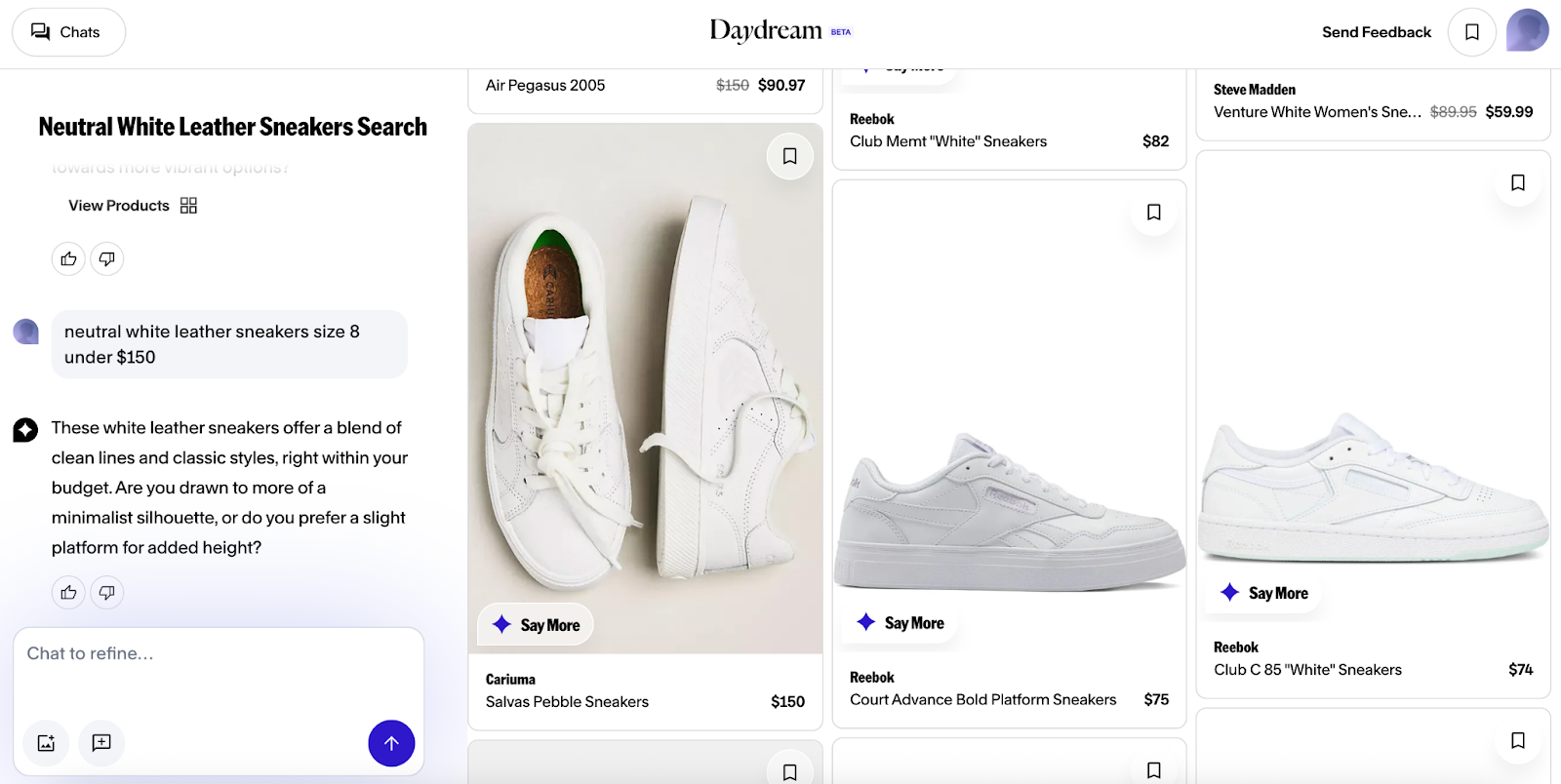
This future is closer than it seems. Daydream already powers conversational shopping. Google is piloting AI shopping tools. Amazon is testing Rufus, its new AI assistant. In small pockets, the future has already arrived—and it’s spreading fast.
How Will Retailers Compete for Attention in a World Where Agents Do the Choosing?
For more than a century, brands have fought for our attention through advertising, packaging, and shelf space. In the 1950s, supermarket aisles became battlegrounds of color and slogans, each brand shouting louder to stand out under fluorescent lights. Trust lived in jingles, billboards, and, eventually, star ratings on Amazon.
That model is cracking. As more shopping moves into the Agentic Web, trust shifts from brands to bots. Nearly 60% of shoppers now use AI to help them shop, and 46% say they trust AI more than friends for something as personal as outfit advice. In Southeast Asia, where digital adoption is fastest, a staggering 88% of consumers already rely on AI recommendations before making purchases.
This creates an entirely new competitive dynamic. The brand with the biggest ad budget may no longer win the shelf. Instead, the brand that best fits the agent’s contextual criteria—your health data, your climate, your budget, your taste profile—rises to the top. The “invisible middle shelf” of e-commerce becomes a meritocracy of data fit.
But new risks emerge. What prevents agents from cutting backroom deals with brands? What ensures they aren’t quietly steering us toward products that serve their incentives, not ours? Agent explainability is going to be critical.
How Much of Ourselves Are We Willing to Automate Away?
A recent survey found that 34% of U.S. consumers would allow AI to make purchases for them, while the majority—66%—still prefer to decide for themselves. People crave relief from decision fatigue, but they’re wary of surrendering agency.
The consequences of adopting agentic shopping support, however, are profound. Once agents can reliably surface any product that meets your functional needs, the differentiator is no longer the brand or the packaging. It’s you—your taste, your values, your style, your ethics. Taste becomes a survival skill. The clearer you are about what matters, the better your agent can serve you.
Modern shopping already hints at this tradeoff. Consider Amazon’s Subscribe & Save: millions of households hand off their toothpaste, detergent, or pet food decisions to an algorithm. It’s liberating in the moment—but also a quiet erosion of awareness. The risk is not that agents make decisions poorly. The risk is that, over time, we forget how to make them at all.
The work ahead isn’t just teaching AI about us. It’s teaching ourselves what we value enough never to outsource.
What Happens if We All Share the Same Assistant?
Retailers and consumers alike must demand a multi-agent ecosystem, with different incentives and transparency standards, to avoid the danger of a homogenized marketplace controlled by a single dominant assistant.
History offers a warning. In the 20th century, a handful of TV networks decided what most of the world saw, read, and believed. Media consolidation gave disproportionate influence to a few gatekeepers. A single, dominant AI assistant could concentrate even more power—shaping not just what we buy, but how we think about choice itself.
Consumer trust is already fragile. 72% of people trust companies less than they did a year ago, and 60% say AI makes trust even more critical. Imagine funneling that mistrust into a single entity that mediates every purchase for billions of people.
Today, we see early signs in platforms like Amazon’s Rufus, Google’s shopping experiments, and startups like Sierra, which aim to replace websites and apps with advanced conversational agents. The convenience is intoxicating—but the risk is conformity. If everyone relies on one dominant agent, the diversity of human taste could flatten into algorithmic sameness.
The safeguard is competition. A multi-agent ecosystem keeps assistants honest, forcing them to compete on transparency, personalization, and alignment. The danger of a “single-agent world” isn’t just commercial; it’s cultural. Homogenized shopping leads to homogenized lives.
The Riches of Knowing Yourself
The future of consumption isn’t about buying more. It’s about caring less about most things and more about a few. Outsourcing the ordinary gives us back the luxury of focus.
The real challenge is not teaching AI about us. It is teaching ourselves what we value.
So I’ll leave you with the same question your future agent will one day ask: what’s on your non-negotiables list?
Fantastic takeaways and love clicks to conversations...recommendations...personalizations---which also leads to conversions - the ultimate ROI metric and puts fuel in the tank.
Excellent article. Thought provoking, inspiring and educational. Thank you!