


Hi everyone. It’s good to be back.
A lot has happened since I last emailed you. New wars. New models. New headlines declaring salvation or collapse depending on the day of the week. I published a book. Thousands of new people subscribed to this newsletter. Somewhere in the middle of all that, the conversation around AI became much louder and somehow less useful.
Before I go further, I want to first reaffirm the purpose of this newsletter.
When I started writing online, I strictly did it for the purpose of testing my own ideas in public. The internet is useful that way. Once an idea is written down under your own name, you have to live with it, which forces a certain conviction and clarity.
But as the audience grew, something subtle changed. I found myself writing to educate people rather than to discover what I actually believed. Gradually, I saw the exercise more as a public service — I was defending hope and optimism by documenting how AI (and technology, broadly) was expanding human potential.
So over the last year (and especially over the last 3 month hiatus) I started asking many of you what resonated most. The answer was surprisingly consistent: we like when you tell us what you really think, even when it might be hard to hear.
That was galvanizing for me, because it turns out that’s what I truly love writing about.
It was the lens through which I wrote my book, The Next Renaissance (which you can now listen to on audio as well as print).
I wanted it to be hopeful without being naive; ambitious without becoming science fiction; understandable without flattening the complexity.
What I didn’t know, while writing it, was who it was actually for.
That uncertainty created constant tension. Every chapter raised the same question: who is this helping?
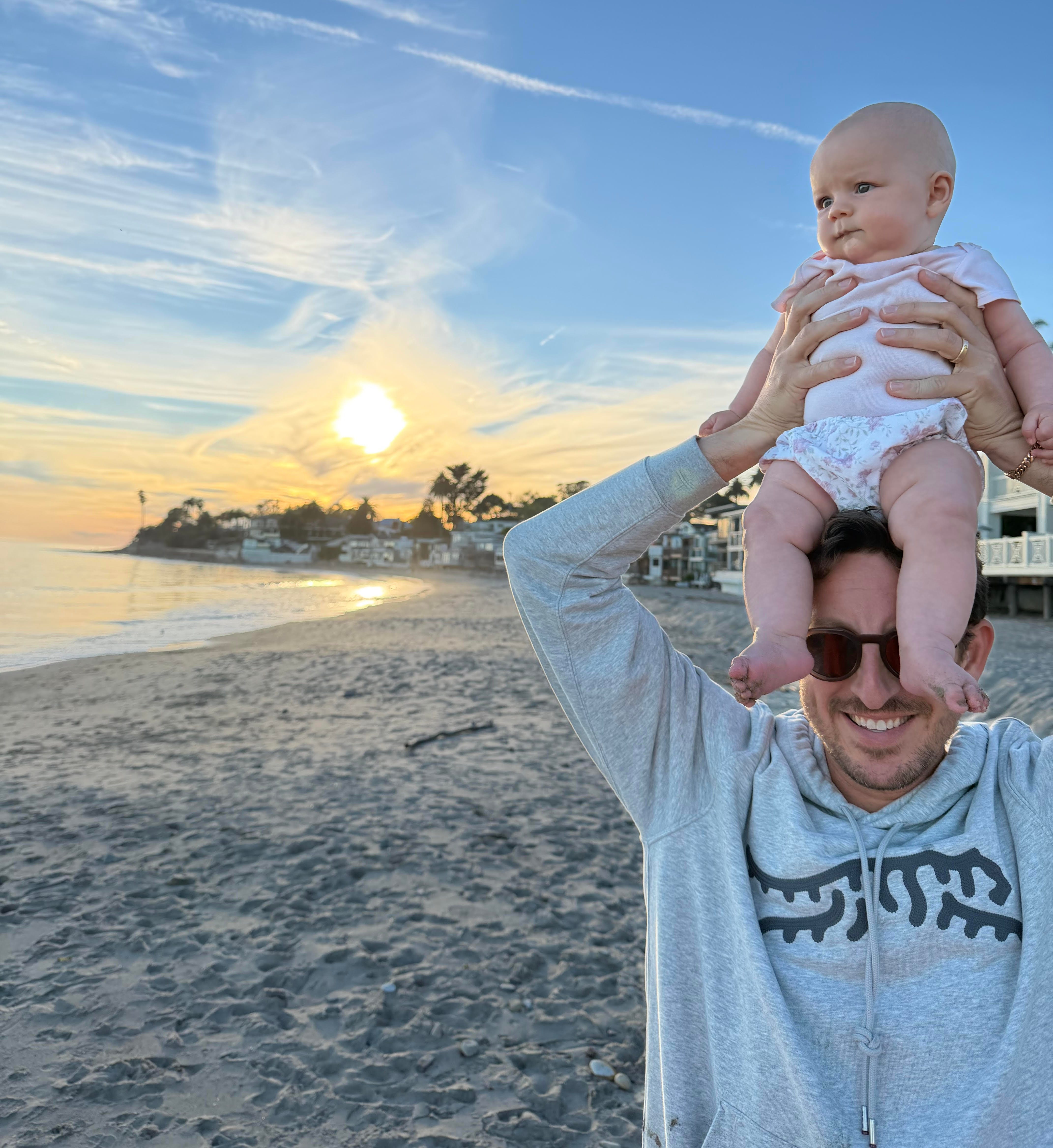
Then my daughter Frankie was born — and I immediately knew.
I realized I hadn’t written it for technologists or executives or policymakers, at least not primarily. I had written it for parents. Or more broadly: for anyone responsible for another human being, trying to make sense of a world that is changing faster than they can explain it.
That realization reframed almost all of my work.
On stage, in boardrooms, at workshops, town halls, union meetings; everywhere I go, I increasingly meet two versions of the same person.
One wants to understand how AI will affect their business — how they can leverage or invest in AI to make more money.
The other is worried that it will come at the expense of the world their children are inheriting.
It’s not difficult to understand the anxiety. Despite a long, proud history of technology improving the human experience, our recent relationship with it isn’t great.
Cell phones captured the soul and spirit of children and stole their innocence. We gave everyone access to unmetered information before we taught them how to metabolize it. Every war, catastrophe, corruption scandal, and existential threat now arrives instantly, continuously, and algorithmically amplified. Social media discovered that outrage spreads faster than truth and built trillion-dollar businesses around the observation.
At the same time, many people watched the foundations of adult life become economically absurd. Housing. Education. Healthcare. The three pillars of a developed society became much more expensive, while seemingly everything else became frictionless and cheap.
And now we are entering the era of unmetered intelligence.
In 2021, my friend Boris Power and I wrote a paper called Unmetered Intelligence. The thesis was simple: intelligence itself was beginning to behave like a utility. Something abundant. Cheap. Ambient. Like electricity or bandwidth.
That prediction now feels less theoretical by the month.
The cost of advanced cognition is collapsing. Models that were prohibitively expensive two years ago are now effectively free.
This matters for all sorts of reasons; principally, we should all care about the decline in cost of anything, because civilizations change when essential resources become abundant.
But abundance is morally neutral.
Access to the internet does not make everyone thoughtful. Literacy does not guarantee wisdom. Access to gyms doesn’t guarantee fitness.
Unmetered intelligence will not magically produce a world of brilliant, fulfilled citizens. It simply means humanity is gaining access to extraordinary cognitive leverage.
What we choose to do with it will define our outcomes, individually and collectively.
The dystopian version is already familiar. Extreme outcomes include supercharged villains, economic collapse, extreme concentration of power.
More insidious pictures describe passive people, synthetic relationships, outsourced meaning, algorithmic sedation; a civilization that automates so much of life that it eventually forgets why life was valuable in the first place.
On the other hand, the optimistic version is usually described without much clarity either: AI as an omnipotent god; paradise found; struggle solved; heaven on earth.
All of these outcomes present this technology (and seemingly future technology) as something that happens to us, instead of for us, or with us.
Neither future is inevitable. Technology does not absolve us of responsibility; it concentrates it.
It’s up to us to decide not just what machines can do, but what humans should continue doing anyway. The antidote to fatalism is agency.
Going forward, this newsletter—now renamed Unmetered Intelligence—will explore the promises and dangers of abundant intelligence.
Some essays will be practical. Others will be philosophical. Some will probably be unpopular. All will attempt to frame constructive responsibility as a reasonable alternative to ambient dread, even when one is much less appealing (or even believable) than the other.
I’ll try to publish twice a month. Occasionally more when something important happens, or less when the weather in Santa Barbara is particularly good.
It’s good to be back. See you again soon.
Visit zackkass.com to learn more about Zack and get in touch.
Completely agree and can’t wait to hear more of your latest thinking!
Welcome back, Zack! As somebody who has closely watched this evolution as you became a father, this really hit home. The shift in perspective from writing for executives to writing for parents is exactly what the AI conversation is missing right now. Framing this era around human agency and constructive responsibility rather than ambient dread is a breath of fresh air. Looking forward to the bi-monthly reads!